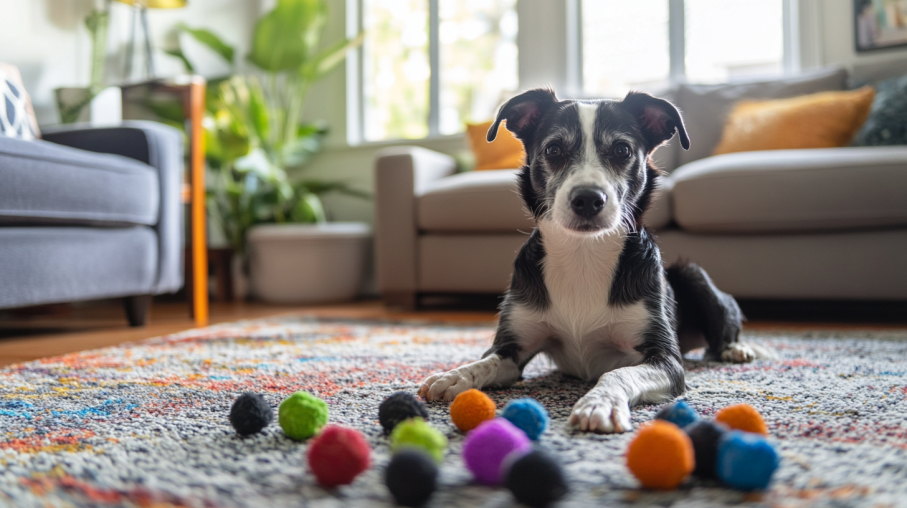
As our beloved pets get older, ensuring they stay mentally stimulated becomes increasingly important. Despite the graying fur and slower pace, senior dogs remain eager to play and interact with their owners. Certified veterinary behaviorist Dr. Lore Haug notes that a lack of enrichment can lead to a ‘shrinking world’ syndrome, where the reduced activity results in fewer mental and physical challenges for aging canines.
It is a common misconception that older dogs prefer less interaction. In fact, providing regular mental stimulation for senior dogs can significantly enhance their cognitive agility, improve their quality of life, and strengthen the bond with their owners. Engaging in enrichment activities for older dogs, such as puzzle toys, treat puzzles, and nose work, can offer valuable challenges and rewards.
Regular exercise is also crucial for maintaining mobility and overall health. Activities like daily walks, gentle swimming, and stretching exercises not only keep joints limber and muscles strong but also offer essential mental stimulation. Additionally, social interactions or adding a new canine friend can keep a senior dog engaged and active.
Key Takeaways
- Senior dogs need continuous mental and physical stimulation to prevent cognitive decline and improve their quality of life.
- Regular exercise, including walks, swimming, and stretching, helps maintain a senior dog’s mobility and mental health.
- Interactive toys like puzzle feeders and snuffle mats are effective tools for keeping senior dogs engaged.
- Social interactions, whether through play or the introduction of a younger dog, can benefit senior dogs significantly.
- Enrichment activities should be tailored to an older dog’s mobility and health conditions.
Understanding Canine Enrichment and Its Importance
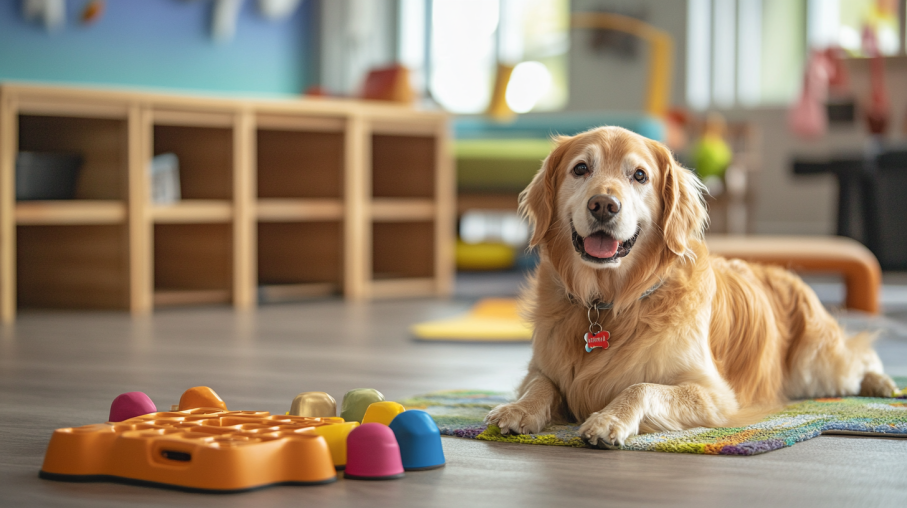
Canine enrichment activities play a significant role in enhancing the lives of our pets, particularly as they age. These activities provide both mental stimulation and physical engagement, which are vital for maintaining a healthy and happy lifestyle for senior dogs. Engaging in dog-friendly activities not only keeps them active but also ensures their emotional and cognitive well-being.
What is Canine Enrichment?
Canine enrichment refers to any activity or environment that enhances a dog’s quality of life by stimulating their mental and physical faculties. This can include various playful and interactive elements, such as:
- Food puzzles and treat-dispensing toys
- Interactive games like fetch and agility
- Social interactions with other pets and humans
- Sensory activities involving smells, textures, and sounds
The goal of these activities is to mimic natural behaviors and provide diverse and engaging challenges, ensuring a balanced and enriched lifestyle for dogs.
Why is Canine Enrichment Crucial for Senior Dogs?
As dogs age, they can develop age-related diseases such as arthritis, dental issues, and canine cognitive dysfunction, similar to Alzheimer’s disease in humans. Enriching senior dog’s life becomes critical in managing these conditions and maintaining their overall well-being. Here are some reasons why enrichment is essential:
- Physical Health and Fitness: Regular physical activity, even in the form of shorter walks or gentle play, can prevent obesity and maintain muscle tone.
- Mental Stimulation and Stress Reduction: Activities like puzzle feeders and snuffle mats keep their minds sharp and reduce anxiety.
- Enhanced Behavioral Development: Social enrichment through interaction with other dogs can reduce undesirable behaviors and promote calmness.
- Sensory Enrichment: Exposure to various smells and textures helps keep their senses engaged and balanced.
Providing a variety of enriching activities tailored to their abilities can significantly improve their quality of life, leading to a happier and healthier aging process.
| Enrichment Type | Benefits | Examples |
|---|---|---|
| Physical Enrichment | Maintains fitness, prevents obesity | Gentle walks, modified fetch games |
| Mental Enrichment | Keeps the brain sharp, reduces anxiety | Puzzle feeders, snuffle mats, scent games |
| Social Enrichment | Reduces loneliness, enhances emotional well-being | Playdates, group walks, calm interactions with other dogs |
| Sensory Enrichment | Stimulates senses, balances energy levels | Exploring new environments, exposure to different textures and sounds |
In summary, engaging in tailored canine enrichment activities can significantly enhance a senior dog’s life, making their golden years joyful and fulfilling. It’s essential to choose appropriate dog-friendly activities that accommodate their changing needs and capabilities.
Interactive Toys for Keeping Your Senior Dog Engaged
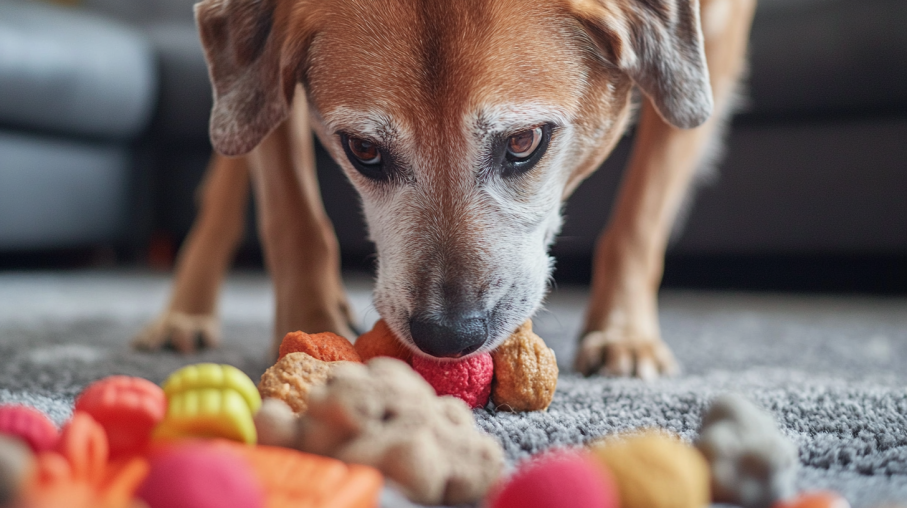
As our furry friends age, it becomes essential to provide them with activities that keep their minds sharp and bodies active. Using a combination of interactive dog toys and mental stimulation toys for dogs can significantly contribute to senior dog engagement. Let’s explore some effective toy options and how they benefit our senior companions.
Puzzle Toys and How They Stimulate Minds
Puzzle toys are designed to challenge a dog’s problem-solving abilities and keep their brain active. Brands like Nina Ottosson offer toys like the Dog Brick Puzzle priced at $18, which require dogs to use their paws and nose to uncover hidden treats. This type of mental stimulation is crucial for maintaining cognitive function in senior dogs. Additionally, the Outward Hound Hide A Squirrel Interactive Puzzle Toy, available for $15, provides a fun hide-and-seek activity that also promotes mental engagement.
Rotating Toys to Maintain Interest
Senior dogs can lose interest in toys quickly, so rotating toys regularly helps keep their engagement levels high. A popular option is the KONG Senior Dog Toy, priced at $10, which can be filled with treats or peanut butter, offering both mental and physical stimulation. Pair this with the ZippyPaws Skinny Peltz No Stuffing Squeaky Plush Dog Toy ($9 for a pack of 3) to provide varied textures and sounds that keep a dog intrigued.
Scent-based Toys and Nose Work
Leveraging a dog’s keen sense of smell, scent-based toys and nose work activities are ideal for senior dogs experiencing hearing loss, which affects around 30% of older canines. Engaging their olfactory senses can be achieved with toys like the Multipet Duckworth Duck plush toy at $8, which provides an aromatic experience. Homemade scented toys, such as towel tubes filled with treats, are another effective and low-impact way to stimulate mental and physical activity. Remember to use these toys on non-slip surfaces to accommodate dogs with joint issues.
| Product | Description | Price |
|---|---|---|
| Outward Hound Dog Brick Puzzle | Requires dogs to use paws and noses to uncover treats, promoting mental stimulation. | $18 |
| KONG Senior Dog Toy | Can be filled with treats or peanut butter for extended engagement and chewing satisfaction. | $10 |
| Multipet Duckworth Duck Plush Toy | Provides an aromatic experience and tactile stimulation. | $8 |
| ZippyPaws Skinny Peltz Squeaky Plush Toy (3 pack) | Features varied textures and sounds to keep dogs interested. | $9 |
| Outward Hound Hide A Squirrel Puzzle Toy | Engages dogs in a fun hide-and-seek game, ideal for mental stimulation. | $15 |
| Playology Pebble Chew | Offers a durable, engaging chew experience for older dogs. | $15 |
Teaching New Tricks to Senior Dogs
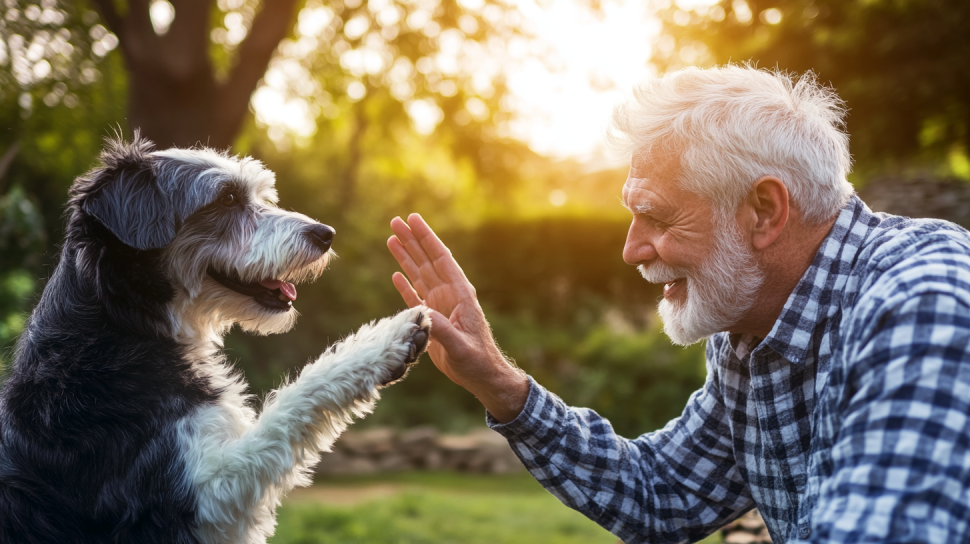
Contrary to the old saying, you can indeed teach an old dog new tricks. Engaging in dog trick training is beneficial in multiple ways, offering both physical and mental stimulation to aging pets. Simple commands such as “sit,” “shake,” and “speak” serve as fundamental exercises in rewarding dog training. Teaching a senior dog these activities can enhance their cognitive function, giving them the enjoyment of learning while maintaining their mental sharpness.
For older dogs experiencing physical limitations such as joint pain or arthritis, low-impact tricks like teaching them to grab a blanket and roll over can be both satisfying and manageable. Additionally, activities involving cognitive stimulation, like learning the names of different objects or toys, extend their mental abilities. This approach aligns with findings published in Frontiers in Veterinary Science, which indicate senior dogs engaged in playful and active relationships with their owners exhibit more responsiveness to training.
Training senior dogs to perform tasks like ringing a bell to signal the need to go outside not only improves communication but also offers them mental challenges. More advanced tricks can include teaching a dog to open a door by ringing a bell, which involves layers of learning and problem-solving.
Cognitive function in older dogs can also be nurtured through scent-based activities, crucial considering the sensory decline some senior dogs face. Research in Applied Animal Behaviour Science supports the welfare benefits of nose work, ensuring that these activities keep them engaged and happy. Not to mention, incorporating scent games can be rewarding dog training, particularly effective for dogs with diminished sight or hearing.
Overall, teaching new tricks taps into the adaptive nature of the canine brain. Whether it’s training them to walk backward to boost body awareness or playing hide-and-seek with treats as suggested by Kathryn Primm, DVM, the opportunities for mental and physical enrichment are numerous. By focusing on appropriate and rewarding activities, we can significantly improve the quality of life and maintain the cognitive function in older dogs.
Regular Exercise: Keeping Your Senior Dog Active
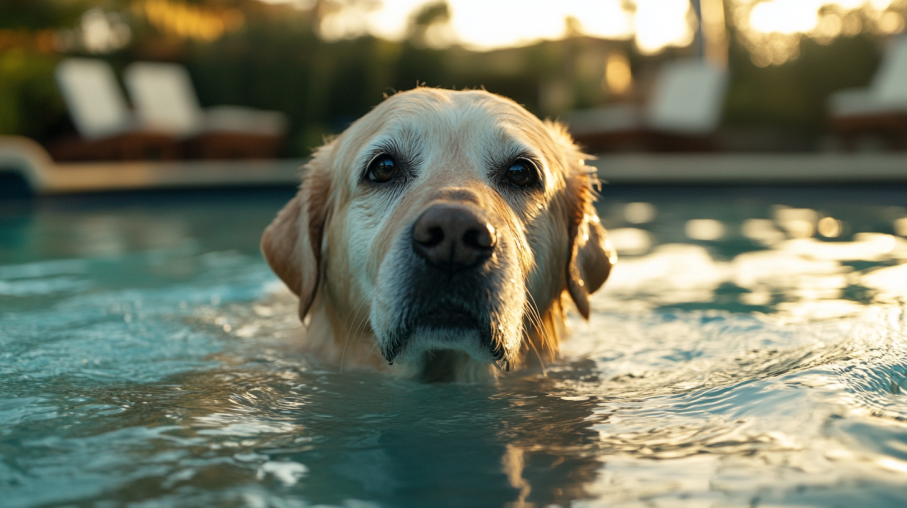
Maintaining regular exercise is crucial for the well-being of senior dogs. Engaging in daily senior dog exercise helps to keep joints limber, muscles strong, and weight under control. Additionally, regular physical activity is essential for promoting canine mobility, which often diminishes with age. Here we explore some effective low-impact activities for aging dogs to ensure they remain active and healthy.
Benefits of Daily Walks
Daily walks are fundamental for senior dogs, providing both physical exercise and sensory stimulation. These walks offer opportunities for mental engagement as they encounter different sights and smells. Such sensory experiences can be particularly beneficial in mitigating age-related cognitive decline. Short, slow-paced walks in favorable weather conditions are ideal, as senior dogs may be sensitive to extreme temperatures.
Swimming as a Low-Impact Activity
Swimming stands out as a low-impact activity that is gentle on joints while still providing a full-body workout. This form of exercise is especially therapeutic for senior dogs with arthritis or stiff joints, as the buoyancy of the water reduces stress on their bodies. Warm water swimming is highly recommended as it can help relax joints and muscles, improving overall mobility and comfort.
Incorporating Gentle Stretching Exercises
Gentle stretching exercises can significantly enhance a senior dog’s flexibility and general comfort. Exercises such as Doga, which combines elements of yoga and dog massage, are particularly beneficial. These activities not only support physical health but also promote a strong bond between the dog and its owner. For optimal results, such stretching routines should be done regularly and tailored to the individual dog’s abilities and needs.
Integrating regular physical exercise into a senior dog’s routine helps ensure they live out their later years with vitality and happiness. Whether it’s through daily walks, therapeutic swimming, or gentle stretching exercises, these activities are key to a fulfilling and healthy life for aging dogs.